

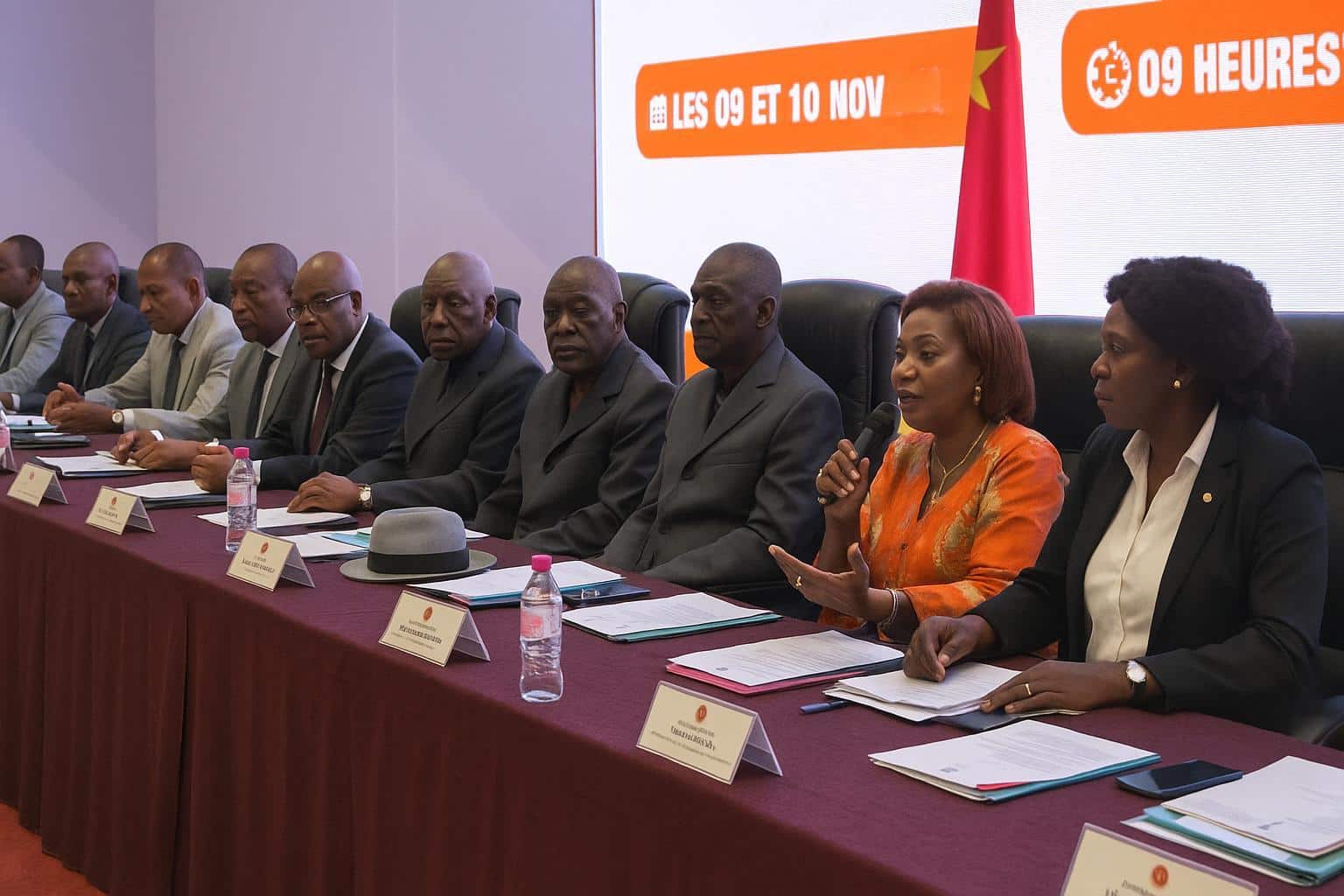
Central Committee gathers in Brazzaville
Beneath the high ceilings of the party headquarters on Avenue de la Paix, the Congolese Labour Party’s Central Committee convened its second extraordinary session on 9 November. The atmosphere blended ritual precision with a palpable sense of urgency as Secretary-General Pierre Moussa declared the meeting open and immediately set the tone. According to him, the work accomplished by the preparatory commission over recent months represents the “strategic base” upon which the Sixth Ordinary Congress will rest, and therefore deserves a debate that is both rigorous and lucid.
A multidimensional agenda for the Sixth Congress
The roadmap submitted to the 367 Central Committee members is as ambitious as it is exhaustive. It spans social and cultural policies designed to reinforce national cohesion, an environmental and sustainable-development plank intended to align with contemporary ecological imperatives, and an economic doctrine that revisits party financing mechanisms. Communication strategy, institutional reforms, relations with categorical unions and associative movements, together with a comprehensive overhaul of the charter, statutes and internal regulations, complete the mosaic. Moussa emphasised that each of these dossiers has been refined through months of consultation and listening exercises within the party’s grassroots structures, rendering them inseparable from the expectations of the electorate at large.
Navigating domestic and global headwinds
The session unfolds at a moment that Moussa described as one of “constant mutation” internationally and of “numerous challenges” on the domestic front. Security concerns, global economic volatility and pressing social demands weigh on the national agenda. Yet the Secretary-General underlined the “determination” with which President Denis Sassou Nguesso and the government are addressing these issues, portraying the party as both a partner and a motor of stability. For observers, the Central Committee’s deliberations must therefore reconcile ideological continuity with pragmatic adjustments, ensuring that the party’s programme resonates in an ever more demanding geopolitical landscape.
Preparing the party machinery for the presidential race
Beyond the technical nature of the documents under review, the political horizon remains unmistakable. Moussa called on members to forge orientations and strategies that will transform the Sixth Congress into a launching pad for an “eclatant victory” in the next presidential election. The implicit message is that organisational discipline and doctrinal clarity must translate into electoral momentum. In the corridors, several delegates spoke of renewing mobilisation networks and revitalising local sections so that the resolutions adopted in Brazzaville filter down swiftly to the most distant districts. While no electoral calendar was officially discussed, the sub-text of every intervention placed the forthcoming national vote squarely at the centre of the deliberations.
À retenir
Two days of intense scrutiny are expected to culminate in the validation of key axes that will structure congress debates, ensuring that the party presents a unified and forward-looking face. The breadth of the agenda, coupled with Moussa’s insistence on analytical rigour, reflects a desire to align ideological heritage with contemporary exigencies without compromising internal cohesion.
Le point juridique
A substantial portion of the drafts concerns the party’s foundational texts—charter, statutes and internal regulations. Legal advisers present stress that updating these instruments responds to the principle of normative consistency, ensuring that procedures governing leadership renewal, disciplinary action and financial oversight meet both national legal requirements and international best practices. In Moussa’s words, the exercise safeguards “the regular functioning of our organisation’s bodies”, thereby buttressing the legitimacy of decisions that will emerge from the Sixth Congress.