

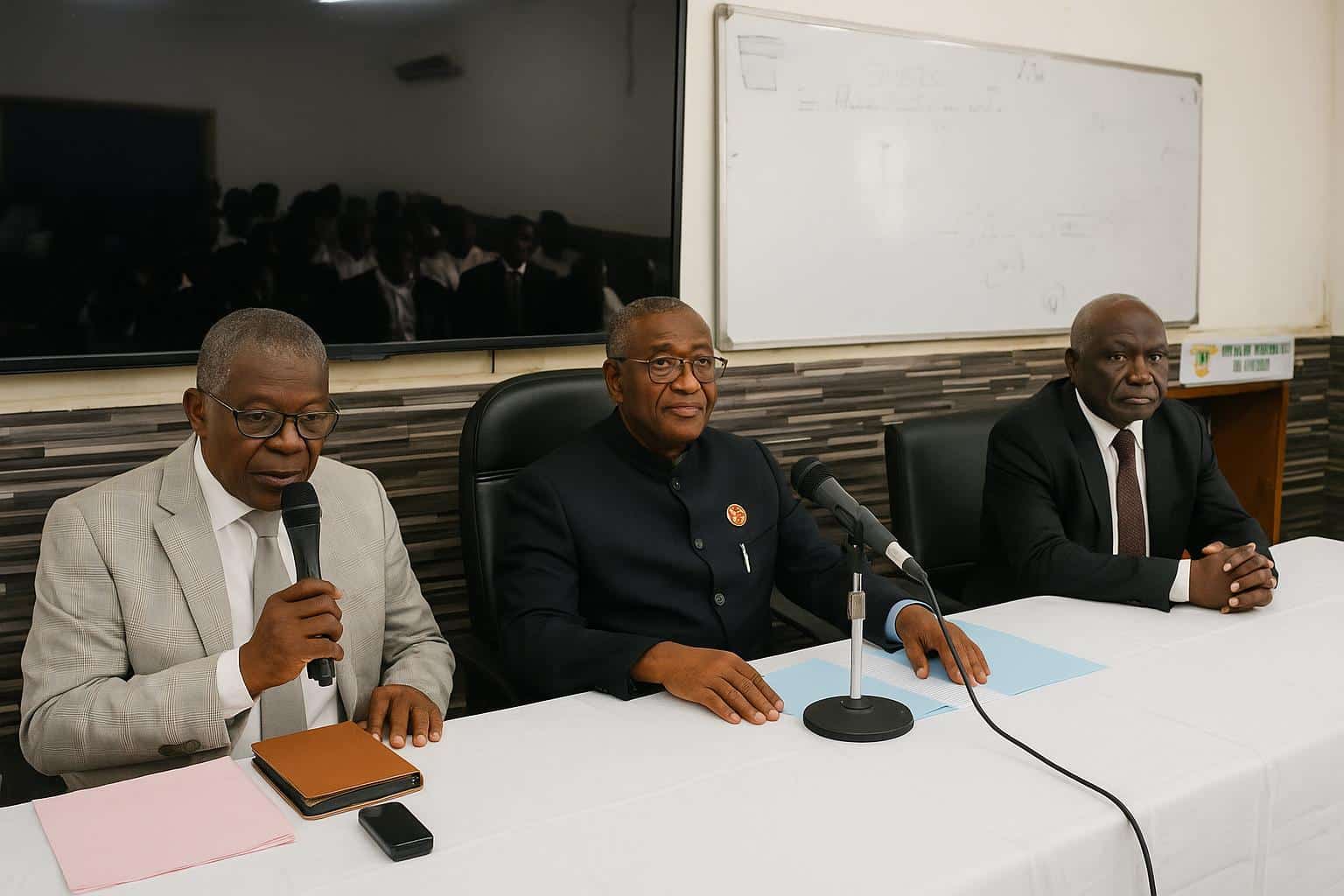
A strategic visit under scrutiny
The sharp morning light of 7 November had barely pierced the corridors of the Talangai District Reference Hospital when Professor Jean Rosaire Ibara, Minister of Health and Population, stepped through the front gates. Officially, the agenda spoke of a routine inspection of emergency, maternity and paediatric wards, as well as the resuscitation unit currently undergoing renovation. In practice, the visit was anything but routine. Word had spread about rising concerns over professional conduct within one of Brazzaville’s busiest public hospitals, prompting the minister to couple his tour with a high-level meeting of the managerial board and key clinicians.
Allegations of malpractice detailed
The tone of the closed-door exchange was unambiguously firm. Drawing on reports compiled over recent months, the minister enumerated a litany of infringements that, if substantiated, would undermine both medical ethics and public finances. He referenced the clandestine sale of pharmaceuticals allegedly smuggled into wards, informal consultations conducted outside official working hours, the redirection of diagnostic tests toward private laboratories, and the collection of unauthorised fees. Particularly sensitive is the accusation that caesarean kits, declared free by presidential instruction, are being sold to vulnerable mothers who believe no other choice is available.
“We embraced a vocation dedicated to the welfare of others,” Professor Ibara reminded his audience. “That noble responsibility imposes discipline, probity and exemplarity. Any practice that diverts medicines or revenues away from the State deprives citizens of their right to equitable care.” The minister’s words echoed broader government policy that positions universal health coverage as a pillar of the 2022-2026 National Development Plan, a framework seeking to bolster human capital and social cohesion.
Government vision for ethical healthcare
Beyond the admonition lay a blueprint for reform. The minister reiterated that revenue generated by public facilities is, by law, State property earmarked for reinvestment in services and equipment. Healthcare workers motivated chiefly by personal gain, he suggested, should consider establishing private clinics that operate under the regulatory oversight of the Ministry. The statement aligns with recent ministerial circulars intended to clarify the boundary between public duty and private practice, a delicate balance in many sub-Saharan health systems.
Observers note that Professor Ibara’s direct language contrasts with his traditionally consensual style, signalling that the ministry is determined to stem financial leakages as fiscal space tightens worldwide. The approach mirrors initiatives in neighbouring CEMAC countries where audits of public hospitals have led to tighter procurement rules and electronic billing designed to minimise human interference.
Human resources at a crossroads
A second focal point of the meeting concerned staffing levels. With 1 116 permanent employees on payroll, Talangai Hospital is, according to the minister, nearly double its optimal capacity when benchmarked against regional norms. Overstaffing, he argued, can inadvertently foster idleness and, paradoxically, petty rent-seeking. He therefore mandated Director-General Firmin Eyikili to submit, within weeks, a restructuring plan that rationalises assignments while preserving essential expertise. The reform is expected to dovetail with the civil-service modernisation process led by the Ministry of Public Administration, whose digital registry aims to curb ghost workers and streamline career progression.
Patients’ trust at stake
At the heart of the debate lies a social contract between the hospital and the community it serves. Residents of Talangai, a densely populated arrondissement, rely on the facility for emergency obstetric care, paediatric interventions and increasingly sophisticated trauma management. Any perception that patients are being exploited risks deterring timely visits, deepening health disparities and fuelling recourse to informal care networks that escape medical oversight.
The ongoing refurbishment of the resuscitation ward, financed through a public-investment envelope managed by the Treasury, illustrates the State’s willingness to modernise infrastructure. Yet bricks and mortar alone cannot cure mistrust. Restoring confidence, the minister emphasised, requires a cultural shift grounded in transparency, regular audits and the visible sanction of offenders, should investigations confirm wrongdoing.
As the delegation departed, construction workers resumed their tasks under the soft whir of concrete mixers, a tangible sign that the hospital is evolving. Whether the moral reminder delivered by Professor Ibara will translate into sustained behavioural change now depends on the collective resolve of administrators, practitioners and support staff. For thousands of families in northern Brazzaville, the outcome will shape not only clinical statistics but also the very perception of the public sector’s capacity to protect and heal.