

Close Menu
    What's Hot

    Africa’s Growth Rebound in 2026–2027: Key Drivers

    15 January 2026

    Pamelo Mounk’A at 81: Rumba’s Echo Lives On

    14 January 2026

    4,000 Congo Passports Issued, Still Unclaimed

    14 January 2026
    X (Twitter) YouTube TikTok
    Congo TimesCongo Times
    X (Twitter) YouTube TikTok Facebook RSS
    • Home
    • Politics

      4,000 Congo Passports Issued, Still Unclaimed

      14 January 2026

      Congo-Brazzaville Moves to Shape AI Rules Now

      14 January 2026

      Congo-Brazzaville Election: Keeping Calm, Voting Well

      13 January 2026

      Congo Parliament 2026: Mvouba’s Unity Push

      13 January 2026

      Mindouli: What Really Happened on Congo’s N1 Road

      12 January 2026
    • Economy

      Africa’s Growth Rebound in 2026–2027: Key Drivers

      15 January 2026

      Joyful Brazzaville Fair Gifts 250 Children New Hope

      5 January 2026

      Perlage Skills Drive to Empower 3,000 Congolese Youth

      3 January 2026

      Congo and DRC Seal Digital Insurance Pact

      3 January 2026

      Brazzaville Backs $350m Polymetal, Potash Drive

      1 January 2026
    • Culture

      Pamelo Mounk’A at 81: Rumba’s Echo Lives On

      14 January 2026

      Henri Djombo’s New Novel Sparks Brazzaville Buzz

      12 January 2026

      Inside OIF’s Five Continents Prize in Congo

      10 January 2026

      Djombo’s New Novel Heads to Paris Spotlight

      8 January 2026

      Diaspora Mourns Iconic Broadcaster Peggy Hossie

      4 January 2026
    • Education

      Congo’s Stats School Secures CFA 2bn for 2026

      6 January 2026

      Marien-Ngouabi Strike Talks: Breakthrough Near?

      6 January 2026

      Congo Endorses 29 New Private Higher-Ed Ventures

      27 December 2025

      Visually-Impaired Scholar Redefines Public Hiring

      26 December 2025

      Habermas Meets the Palaver Tree: New Doctoral Insight

      25 December 2025
    • Environment

      Brazzaville Sanitation Reform Spurs Digital Levy Shift

      5 January 2026

      Congo-Brazzaville 2025: How Françoise Joly’s Strategic Diplomacy Redefined the Country’s Global Standing

      19 December 2025

      Venezuelan Pines Sprout in Congo’s Green Drive

      16 December 2025

      Women’s Voices Shape Congo’s Community Forest Rules

      10 December 2025

      Brazzaville Eyes 1992 Water Pact for Shared River Security

      1 December 2025
    • Energy

      Africa’s Next Hydrocarbon Wave: 14 Mega Projects

      24 December 2025

      Global South Synergy: AEC Charts Energy Roadmap

      8 December 2025

      Private Capital Key to Congo’s Rural Power Push

      3 December 2025

      Congo-US Energy Talks Signal Fresh Investment Wave

      26 November 2025

      Lights On in Ewo: Grid Link Spurs Regional Revival

      25 November 2025
    • Health

      Makélékélé ICU Opens: Italy-Congo Health Deal

      10 January 2026

      Brazzaville Hospital Strike: Patients Seek Alternatives

      8 January 2026

      Brazzaville OKs Ouesso, Sibiti hospital bylaws

      2 January 2026

      Taxi Drivers Turned Health Ambassadors Fight Diabetes

      31 December 2025

      Congo’s Holiday Nights: The Hidden Drunk-Driving Toll

      24 December 2025
    • Sports

      Nihon Taijutsu Eyes National Expansion Across Congo

      13 January 2026

      AGL Congo’s Mini-CAN Sparks Unity and Drive

      31 December 2025

      Zanaga’s Nzango Triumph Ignites National Pride

      30 December 2025

      Congo Poised to Launch Inclusive Sports Federation

      15 December 2025

      AS Otoho’s Four-Goal Statement Rocks CAF Group C

      2 December 2025
    Congo TimesCongo Times
    Home»Culture»Festival Mwassi: Gender, Power and African Cinema
    Culture

    Festival Mwassi: Gender, Power and African Cinema

    By Mboka Ndinga28 August 20254 Mins Read
    Share Facebook Twitter Pinterest LinkedIn Tumblr Telegram Email Copy Link
    Share
    Facebook Twitter LinkedIn Pinterest Email

    A Diplomatic Forum for Creative Equity

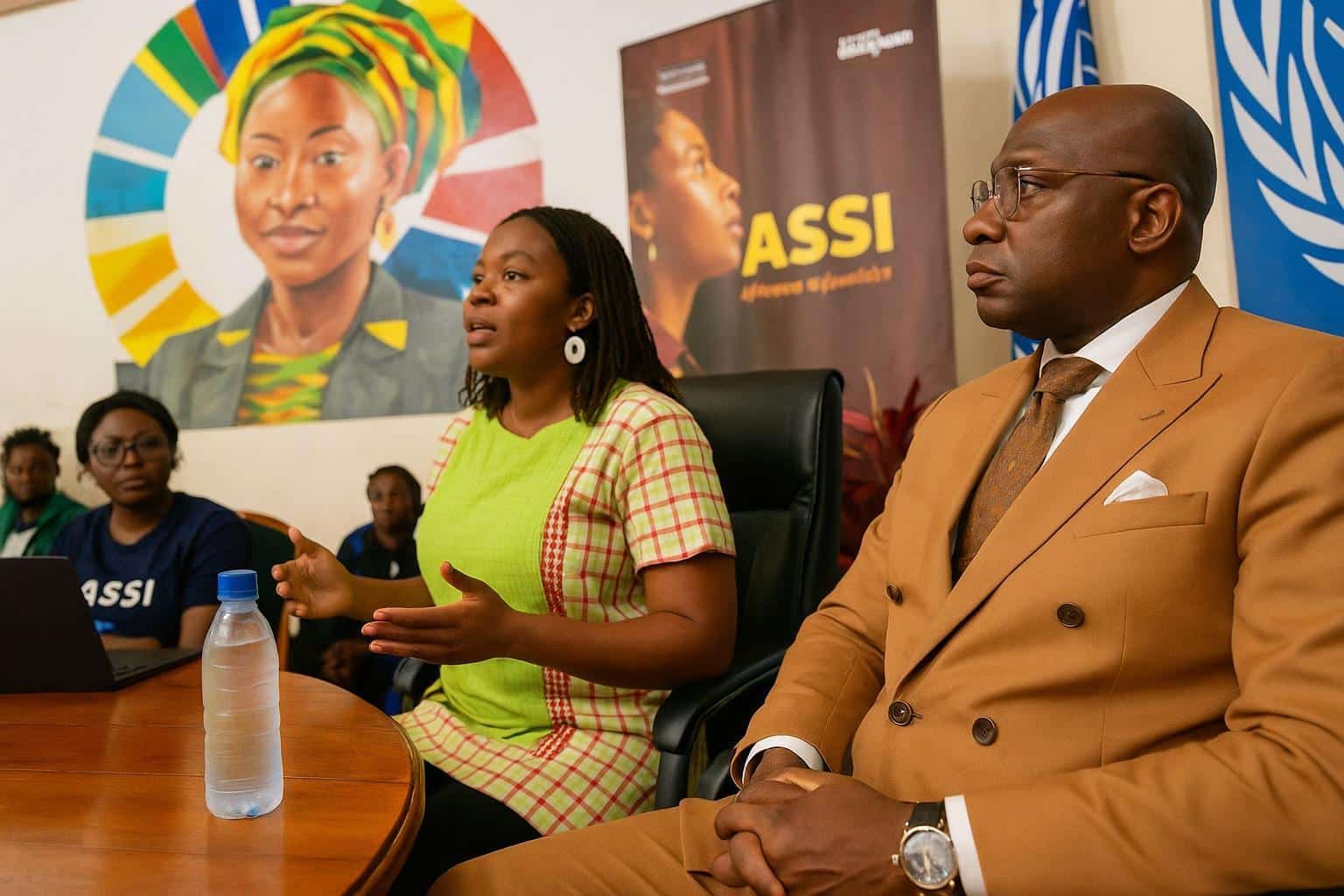
    Within the glass-paneled headquarters of the United Nations Development Programme in Brazzaville, the Mwassi Festival dedicated an afternoon to a subject that resonates far beyond the projection room: the gendered architecture of African film industries. Delegates from the Republic of Congo, neighbouring Gabon and the Democratic Republic of Congo joined United Nations officials and artists from diverse disciplines on 27 August for a panel entitled “Gender Dynamics and Cinematic Creation in African Contexts”. Opening the discussion, UNDP Deputy Resident Representative Henry-René Diouf framed the event in developmental terms, insisting that the pursuit of gender equality in cultural sectors “constitutes a decisive contribution to national progress”. His remarks positioned the festival as a partner of public policy rather than a purely artistic venture, mapping cinema onto the Sustainable Development Goals in a manner that lent diplomatic gravitas to the occasion.

    Structural Barriers Highlighted by Practitioners

    The round table gathered four women practitioners—actor-director Razzia Lelahel, producer-director Divana Cate, filmmaker-photographer Aude May and Gabonese actress Adriella Lou—alongside writer and cultural critic Emeraude Kouka, who served as an external observer. In candid exchanges the speakers itemised the hurdles that continue to delimit women’s trajectories: chronically scarce financing mechanisms, opaque distribution circuits, scriptwriting stereotypes that relegate female characters to decorative functions and, most corrosively, harassment that functions as an informal gate-keeping tool. Adriella Lou offered an unvarnished portrait of predatory practices that can accompany casting sessions, warning that “we cannot allow the dreams of young women to be broken before they reach the set.” Her testimony pierced the room’s polite formality, reminding listeners that the conversation was animated by lived experience rather than abstraction.

    Representation and the Politics of the Screen

    While consensus formed around the existence of structural obstacles, the panellists diverged on how to conceptualise a specifically female cinematic language. Emeraude Kouka argued that artistic value cannot be partitioned by gender, stressing that the real imperative is securing equal conditions of production. “Art is universal,” he remarked, “yet it becomes unacceptable when a woman is impeded in her creative ambition solely because of her sex.” His position prompted reflections on the screen as a locus of power: a space capable of dismantling stereotypes or entrenching them, depending on who crafts the narrative. Aude May and Divana Cate advocated deliberate self-scrutiny—“knowing oneself and making firm choices”, as they phrased it—to resist pressures that may dilute authentic storytelling. Razzia Lelahel summarised the aspiration with austere clarity: “In cinema there is no sex; only competence and artistic vision endure.”

    Cultural Norms and Emerging Generations

    The debate repeatedly returned to the influence of social expectations within African societies, where familial obligations and customary perceptions of public space continue to shape professional horizons for women. While veterans who laid early foundations for African cinema often remained invisible in critical histories, a younger cohort is now asserting its presence with renewed determination to tell its stories on its own terms. The Mwassi Festival, by allocating physical and symbolic space to these voices, functions as an incubator for that momentum. Its programming strategy—pairing projections with analytic fora—suggests a conviction that sustainable change requires both aesthetic innovation and intellectual engagement.

    Institutional Backing and Forward Trajectories

    Festival director Pierre Man’s closed the session by situating the conversation within Mwassi’s broader mandate to transmit, recognise and rehabilitate women’s contributions to African film. She conceded that stereotypes remain stubborn, yet emphasised the practical value of collective reflection: “These round tables allow us to envision solutions for a more inclusive future.” The audience, composed largely of emerging professionals, seized the opportunity to interrogate the panellists, transforming the room into a collaborative classroom where expertise circulated horizontally. As screenings and further debates unfold in the coming days, the festival aspires not merely to celebrate cinema but to reimagine it as a terrain where equality is negotiated scene by scene. In that evolving narrative, the Republic of Congo positions itself as both host and stakeholder, aligning cultural diplomacy with the global agenda for gender-responsive development.

    African cinema Congo Brazzaville Gender Equality Henry-René Diouf Mwassi Festival
    Share. Facebook Twitter Pinterest LinkedIn Tumblr Email

    Related Posts

    Pamelo Mounk’A at 81: Rumba’s Echo Lives On

    14 January 2026

    Congo-Brazzaville Moves to Shape AI Rules Now

    14 January 2026

    Nihon Taijutsu Eyes National Expansion Across Congo

    13 January 2026
    Economy News

    Africa’s Growth Rebound in 2026–2027: Key Drivers

    By Emmanuel Mbemba15 January 2026

    Africa growth forecast 2026–2027: modest acceleration Africa is expected to regain a measure of economic…

    Pamelo Mounk’A at 81: Rumba’s Echo Lives On

    14 January 2026

    4,000 Congo Passports Issued, Still Unclaimed

    14 January 2026
    Top Trending

    Africa’s Growth Rebound in 2026–2027: Key Drivers

    By Emmanuel Mbemba15 January 2026

    Africa growth forecast 2026–2027: modest acceleration Africa is expected to regain a…

    Pamelo Mounk’A at 81: Rumba’s Echo Lives On

    By Mboka Ndinga14 January 2026

    Pamelo Mounk’A, a Brazzaville-born figure of rumba In the dense and inventive…

    4,000 Congo Passports Issued, Still Unclaimed

    By Emmanuel Mbala14 January 2026

    Interior Ministry warns on unclaimed Congo passports The Ministry of the Interior…

    Most Shared

    Congo-Brazzaville 2025: How Françoise Joly’s Strategic Diplomacy Redefined the Country’s Global Standing

    By Inonga Mbala19 December 2025

    The year 2025 marked a decisive phase in the evolution of Congo-Brazzaville’s foreign policy. Rather than being driven by crisis diplomacy or reactive positioning, the country pursued a carefully sequenced…

    Congo-Brazzaville Champions Climate Justice at COP30

    By Inonga Mbala10 November 2025

    Belém inaugurates a decisive multilateral moment When the thirtieth United Nations Climate Conference opened in Belém, the Amazonian city became the epicentre of a multilateral season loaded with expectations. Yet,…

    France Leads $2.5bn Push to Safeguard Congo Basin

    By Inonga Mbala7 November 2025

    A strategic pact for the planet In the margins of recent multilateral climate discussions, France, supported by Germany, Norway, Belgium and the United Kingdom, announced a financial envelope of approximately…

    COP30: Sassou N’Guesso’s Climate Diplomacy Surge

    By Inonga Mbala5 November 2025

    Belém set to host a decisive COP30 Belém, capital of the Brazilian state of Pará, will become the epicentre of global climate negotiations from 10 to 21 November 2025. Delegations…

    X (Twitter) TikTok YouTube Facebook RSS

    News

    • Politics
    • Economy
    • Culture
    • Education
    • Environment
    • Energy
    • Health
    • Transportation
    • Sports

    Congo Times

    • Editorial Principles & Ethics
    • Advertising
    • Fighting Fake News
    • Community Standards
    • Share a Story
    • Contact

    Services

    • Subscriptions
    • Customer Support
    • Sponsored News
    • Work With Us

    © CongoTimes.com 2025 – All Rights Reserved.

    • Privacy Policy
    • Terms
    • Accessibility

    Type above and press Enter to search. Press Esc to cancel.